
What is Mental Reframing?

Mental reframing is a technique that encourages people to look at situations from a different perspective. It involves recognizing negative or unhelpful thoughts and replacing them with more realistic, balanced, and constructive thinking. Instead of ignoring challenges, mental reframing helps people recognize that mistakes and setbacks are opportunities to learn and grow.
For Example:
🚫 Negative thought: “I failed that test, I’m so stupid.”
🟢 Reframed thought: “I struggled with this test, but I can learn from my mistakes and do better next time.”
Why is it Important in the Classroom?
Mental reframing can support students’ academic, social, and emotional development in many different ways:
- Encourages growth mindset: Students can learn to view challenges as an opportunity to grow rather than a personal failure.
- Promotes resilience: Helps students develop the ability to bounce back from setbacks.
- Encourages positive thinking: Teaches students to recognize their progress and ability to improve.
- Promotes mental health and well-being: Provides cognitive strategies that students can use to cope with stressful situations.
- Helps with self-regulation: Helps students recognize the connection between their thoughts, feelings, and behaviours.
Teaching students how to reframe their thoughts can help develop skills they can use both inside and outside of the classroom!
How Can Technology Support Mental Reframing?
- Interactive learning: Digital games allow students to actively identify and reframe negative thoughts.
- Personalization: Students can create digital books, playlists, or videos that reflect their unique personal challenges and experiences
- Accessibility: Digital tools incorporate audio, visual, and text, providing students with multiple ways to participate.
- Independent practice: Students can revisit digital resources when they need support, allowing them to continue their practice outside of structured lesson times.
- Engagement: Gamification and creative digital activities can make abstract psychological concepts easier for younger students to understand.
Technology Resources for Mental Reframing
There are so many technology resources that teachers can use to help students practice mental reframing. I explored a few different tools that could make learning these skills more interactive, engaging, and accessible for students.
Wordwall
Wordwall provides interactive games that can help students practice positive self-talk and mental reframing. These activities can be done as a group or individually with students and also have elements that can be integrated cross-curricularly. Educators can choose from a variety of pre-made templates or create their own! The screenshots below are examples of Wordwall activities that can be used to help students with mental reframing:
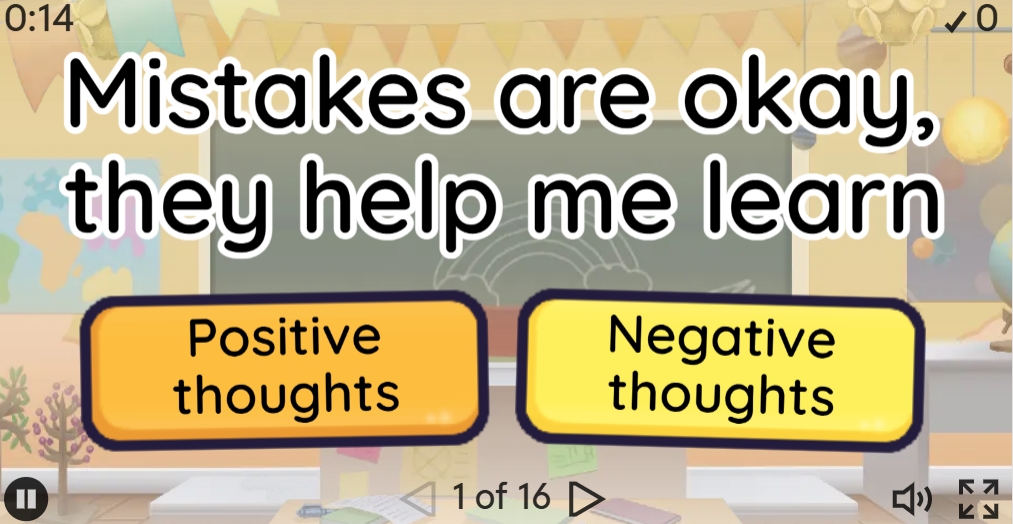
The quiz feature allows students to identify whether a given thought is positive or negative. Students are presented with different statements and must decide whether they are a positive or negative thought. This could be a fun group activity to assess students’ understanding of mental reframing
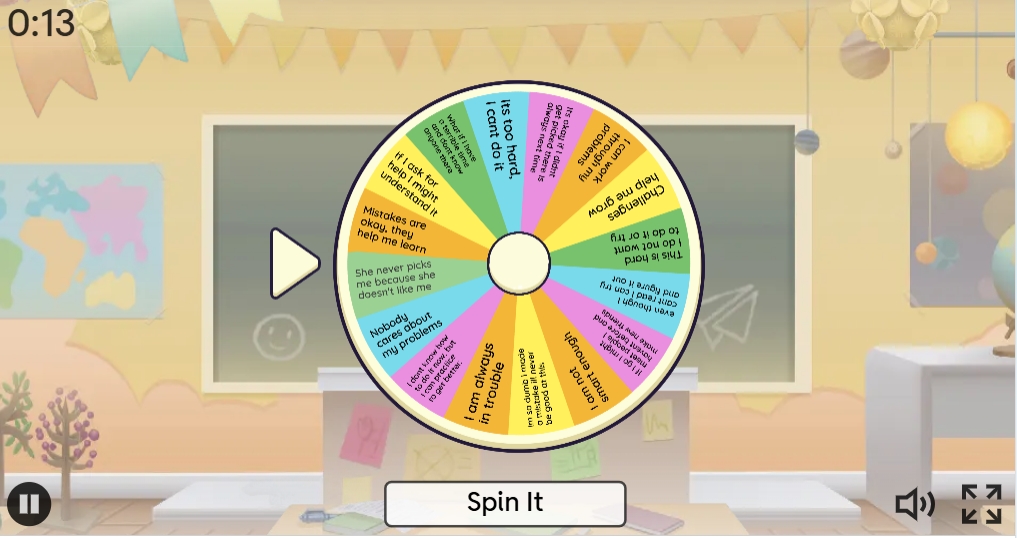
Spin the wheel is a feature that can be used to introduce positive affirmations interactively. Students can take turns spinning the wheel and talking about the affirmation that it lands on. This could also be implemented in literacy by spinning the wheel and having students journal about what the affirmation means to them and how they can apply it to their own lives.
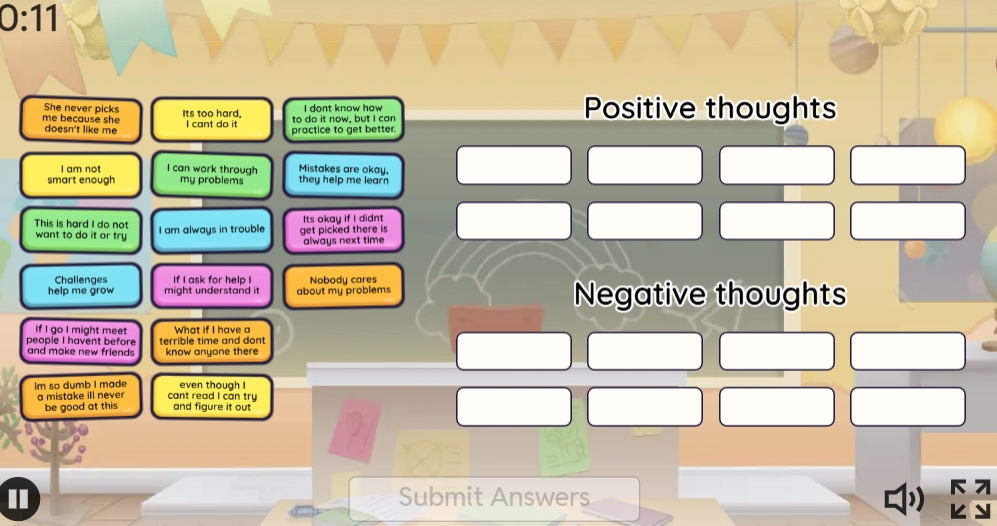
The group sort feature allows students to organize different statements into categories. This activity encourages students to reflect on statements and recognize the difference between helpful and unhelpful (positive and negative) thinking. This is an activity that could be completed independently or as a whole group to encourage discussion.
Book Creator
Book Creator is a website where students can create their own digital books using their own words, life experiences, pictures, and recordings. Below is a quick video showing how Book Creator works. It highlights all the different elements of the website that allow students to personalize their own stories:
A Classroom Example: One way I would integrate this resource in my future classroom is by having students create a book titled, “Things I can Say to Myself When School is Hard.” This gives students a digital resource to go back to when they are struggling to practice mental reframing on their own.
Daily Affirmations Power-Up App
The Daily Affirmations Power Up App encourages positive self-talk by allowing students to listen to personalized affirmations, repeat them, and create personalized playlists. The app encourages engagement by rewarding children for consistent use, motivating them to keep practicing. The image below shows just some of the benefits of this app and how it could provide students with a simple and accessible way to incorporate mental reframing into their daily routines.
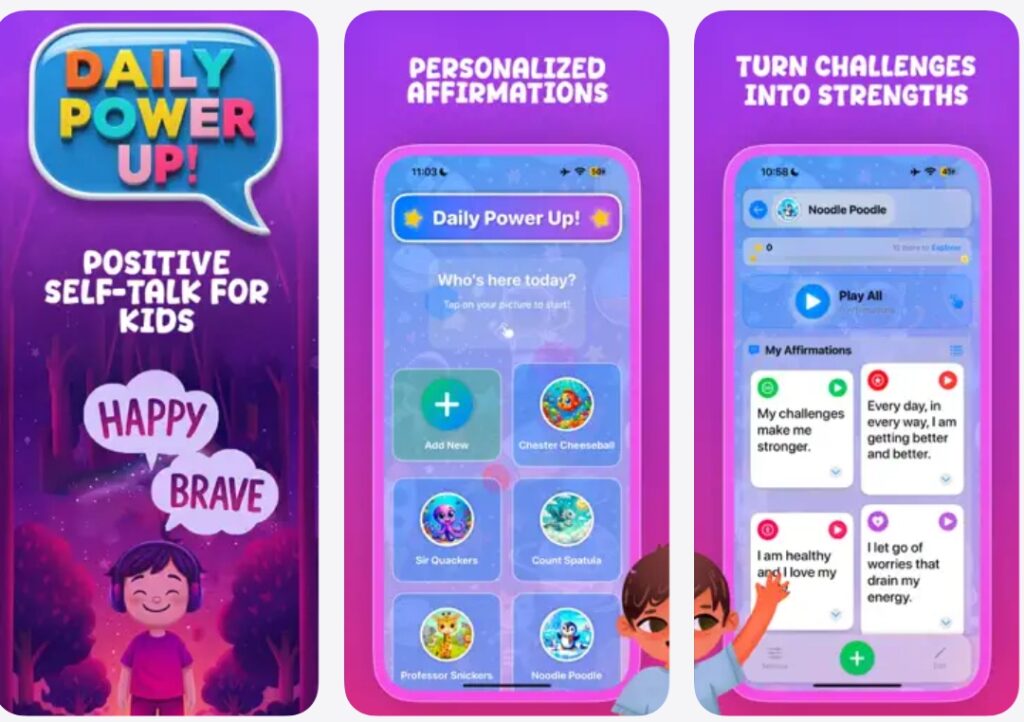
I think that incorporating this app or a similar one for 5-10 minutes a day in the classroom would be extremely beneficial for students and allow them to build their ability to practice mental reframing consistently over time.
Final Thoughts
While technology provides so many valuable tools that can be used to help students develop mental reframing skills, it is also important to recognize its limitations. There are both pros and cons to using technology to develop these skills:
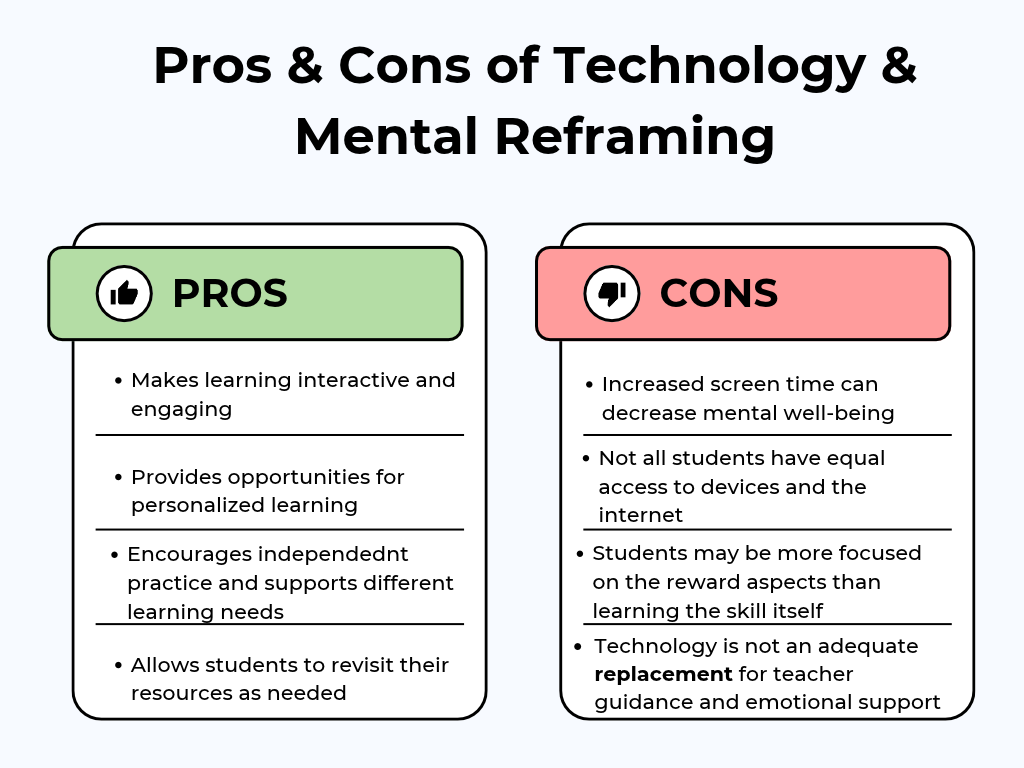
As future educators, it is important it recognize that technology is most effective when it is used with a clear and meaningful purpose. Tools like the ones discussed in this post can provide fun and engaging ways for students to build their skills in mental reframing, however, these tools should be used alongside meaningful classroom discussions, modelling, and chances for students to apply them in real-life situations.
Leave a Reply
You must be logged in to post a comment.